New standards from the American Society of Anesthesiologists broaden the number of procedures that require monitoring a patient’s exhaled carbon dioxide.
The new guidelines went into effect July 1. Previously, end-tidal CO2 monitoring was required for the heaviest level of sedation, general anesthesia, which renders a patient totally unconscious and without sensation. The new standard calls for CO2 monitoring for two lighter forms of sedation, moderate and deep sedation.
The revision applies to Standard 3.2.4 in the VENTILATION, METHODS section: “During regional anesthesia (with no sedation) or local anesthesia (with no sedation), the adequacy of ventilation shall be evaluated by continual observation of qualitative clinical signs. During moderate or deep sedation the adequacy of ventilation shall be evaluated by continual observation of qualitative clinical signs and monitoring for the presence of exhaled carbon dioxide unless precluded or invalidated by the nature of the patient, procedure, or equipment.”
End-tidal CO2 monitoring is becoming increasingly common in a wide range of procedures and fields. Last year, the American Heart Association called for ETCO2 monitoring to ensure proper ventilation during CPR.
Medical practitioners can comply with these ETCO2 monitoring guidelines with capnography monitors. These monitors have sensors to measure exhaled CO2 to ensure proper ventilation.
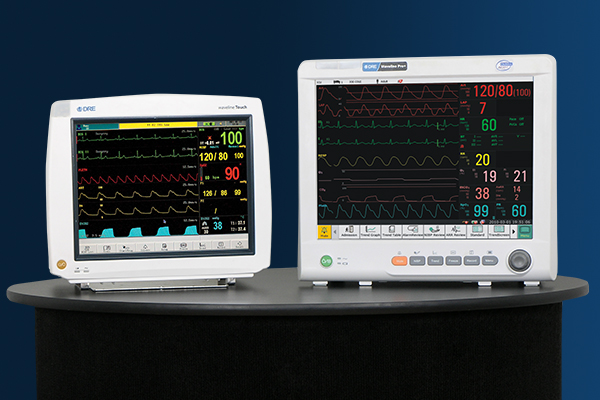
An example of a patient monitor is the DRE Waveline Touch, which measures ECG, respiration, SPO2, NIBP and temperature, and with optional dual invasive blood pressure and EtCO2 monitoring. DRE, a supplier of medical and operating room equipments, has received the US Food and Drug Administration (FDA ) approval for its touchscreen patient monitor Waveline Touch.
The ASA’s new guidelines for CO2 monitoring affect the deep and moderate levels of sedation. The lines between levels of sedation can blur and a patient could unintentionally slip from, say, moderate sedation into deep sedation. Monitoring CO2 during these stages ensures that patients are properly ventilated during sedation.
The levels of sedation are:
- General Anesthesia: The patient loses consciousness and all sensations. General anesthesia must be administered by an anesthesiologist, a nurse anesthetist or by an anesthesiologist’s assistant who is directly supervised by an anesthesiologist.
- Deep Sedation: The patient experiences depressed consciousness and partial loss of protective reflexes and the ability to follow verbal commands. Deep sedation must be supervised by a physician who maintains an expertise in airway management who can manage patients who unintentionally progress to the level of general anesthesia.
- Moderate sedation: The patient is still conscious and can respond to commands. Moderate and minimal sedations can be administered by registered nurses under the direction of the physician performing the procedure.
- Minimal sedation: This level relaxes the patient, who is conscious and can respond to verbal commands.
The Waveline Touch monitor will help medical providers comply with professional guidelines and ensure optimal patient safety.
For more information, visit https://www.dremed.com/.